
BY BILL DONOVAN
SPECIAL TO THE TIMES
WINDOW ROCK – Some 20 years after being convicted for trying to illegally sell masks used in Navajo ceremonies, Richard Carrow is talking about selling his collection of sacred Navajo medicine bundles.
This time the offer is being made to the Navajo Nation.
Carrow received five years probation in that 1996 case and became very well known in certain circles as probably the largest private collector of sacred Navajo cultural items in the world where federal law prohibits non-tribal entities owning such sacred objects.
But, Carrow has been able to get away with it by saying he has documentation that the objects in his possession were purchased before the Native American Grave Protection and Repatriation Act was passed in 1990.
A self-described scholar in Navajo culture, Carrow has claimed to have met or studied with 80 different Navajo medicine men over the years.
“I have more respect for Navajo ceremonialism than half of the people on that reservation,” he was quoted as saying after his conviction in Arizona.
But now, as he enters his 80s, Carrow sent an e-mail to officials in the tribe’s Historic Preservation Office saying he is willing to sell to the tribe almost all of his private collection of Navajo medicine bundles for $25,000.
He says all of the bundles were purchased before 1990 during a time when medicine bundles would come onto the market from time to time.
Martin Link, former director of the Navajo Nation Museum, said it was a common practice for some medicine men before 1990 to pawn their medicine bundles when they weren’t being used to prepare for a ceremony or in a ceremony.
The medicine man wouldn’t ask for much money – usually $10 or $15 – because the main purpose of pawning the bundle was to keep it safe until it was needed again.
Occasionally, Link said, the pawn would go dead and the bundle would be sold to the public to private collectors, so there are medicine bundles legally in private collections but they rarely are offered for sale.
Historical Preservation officials said that in most cases of this kind, the collector, instead of trying to sell the item, just gives them back to the tribe. There have also been a few cases where private collectors have purchased the bundles and then have donated them to the tribe.
In 1999, Carrow repatriated a lot of his collection to the Navajo Nation and Carrow said in his e-mail that all of the objects he is offering to the tribe now were observed by Navajo officials during that repatriation.
Carrow said that Richard Begay, who used to work for the Navajo Historical Preservation Office “was aware I was retaining a significant portion of my collection and it is that portion I am selling now.”
Along with the medicine bundles, Carrow said he has some other items of cultural significance that he will also be including in the sale.
One such item is a series of photographs he said he took of a nine-day ceremony in November 1991 conducted by the late singer Fort Johnson of Kaibeto, Arizona.
Carrow said he assisted Johnson with several sings in the late 1980s and early 1990s and these photographs, Carrow said, may be the only ones ever taken at these ceremonies.
Carrow has given the tribal officials until Jan. 31 to make a decision on whether hey want to buy his collection.
Historical Preservation officials said there is no account that can be used to make a purchase of this kind, but in previous cases where the tribe has been offered something of this type for sale, funds were provided within the tribe.
Carrow so far has not shown tribal officials proof that the items he is offering for sale were purchased before the law was passed in 1990 and, for Carrow, this is critical because if he can’t prove legal rights to own the bundles, federal law recognizes them as being held illegally and the Navajo Nation would have the right to step in and take the items.
Currently, the sale is also being looked at by various groups, such as the Navajo Department of Justice and the Bureau of Indian Affairs, to determine whether Carrow’s claims are accurate.
NAVAJO TIMES | ADRON GARDNER
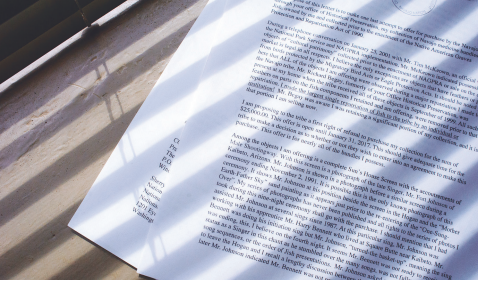
Private collector Richard Carrow has offered the Navajo Nation a “first right of refusal to purchase” a medicine pouch for the sum of $25,000.