

BY COLLEEN KEANE
SPECIAL TO THE TIMES
ALBUQUERQUE – Remote homes, overworked police forces, border towns and open roads into other states make tribal lands fertile ground for sex trafficking, according to advocates raising awareness and reaching out to victims who need help escaping.
“We have to take our blinders off. It is happening. It is real,” said Bonnie Clairmont (Ho- Chunk Nation), a victim advocacy specialist at the Tribal Law and Policy Institute office in Saint Paul, Minn.
Clairmont presented a two-day workshop on Sex Trafficking in Indian Country last week at the BIA training facilities here. With more than 30 attendees from tribal, state and federal agencies along with private citizens, the gathering was one of the first, if not the first, meetings of a statewide tribal task force to address sex trafficking.
Attendees included staff from the New Mexico District Attorney’s office, the New Mexico Children, Youth and Families Department, Indian Health Services, the Bureau of Indian Affairs, Coalition to Stop Violence against Native Women, tribal leaders, behavioral health specialists and private citizens, to name a few.
“This is the first tribal task force of its kind in the country,” said Clairmont adding that, “hearing back from tribes where I have done training, they are (now) identifying cases all of the time.”
Of the presentation, Loudine Wanoskia, a domestic violence client advocate for Jicarilla Apache’s behavioral health department, said, “I was skeptical (but it) opened my eyes. We cannot say it is not happening. We have to educate our people. A lot of this has to do with poverty, drugs and gangs on reservations.”
Clairmont said sex trafficking on tribal lands is hard to detect because it takes many different forms and victims are afraid to speak up.
“It could be any one of us,” she told the group explaining that victims can be any age. But, she added that the most vulnerable are children between the ages of 12 to 14, who are runaways, homeless, or have been in foster care, along with children who lack parental supervision. “They can be lured in by promises of money, drugs and love.”
One of the reasons victims go unnoticed is because the right questions aren’t being asked, Clairmont said. The questions that should be asked include: Are they free to come and go, owe money to someone, not getting paid for their work, work excessively long hours, fail to speak for themselves, along with concerns that they have a sense of lost time, look malnourished, lack personal belongings, appear anxious and fearful and have untreated illnesses or injuries.
Based on information shared at the training, the answers to these questions don’t stand alone; they have to be examined together and in context to the situation.
For example, red flags should go up if a young woman comes into an emergency room and can’t explain her bruises, while a “so called” boyfriend hangs around watching her every movement; a frail, young child without supervision is hoarding food; or a young person shows up all of a sudden with name brand-shoes or clothes.
Social media plays a big part in it all, too.
“Right now there are 200 plus ads online commoditizing and selling young Native women and men in the Albuquerque area alone,” according to a notice sent out about the training.
Another reason it’s hard to recognize sex trafficking is because victims aren’t coming forward.
“The victims fear for their lives if they identify themselves,” said Clairmont, adding that they may face physical abuse, threats against their family and withdrawal of basic needs like food and a place to live. Also, often their identification is taken away from them and some are dependent on drugs.
Clairmont advised that one way to combat sex trafficking is for community people to have their ears to the ground and take up the role of the “nosey Auntie.”
“We all need to be nosey. It’s knowing who is in your community. Ask (youth), ‘Where are you going? Who is responsible for you?”’ she advised.
“We need to get a handle on this,” said Joslin Walker, Diné who is from the Ramah Navajo community and now lives in Albuquerque. “I want to bring more awareness about the probability and prevalence of (sex trafficking) on reservations.”
While presenters reported that trafficking is happening within families, it’s also happening on the outskirts of tribal lands within border towns, especially where there’s high mineral exploration and drilling going on.
“There’s lots of mobility; lots of men who are not partnered, it’s a bad combination,” noted Clairmont.
Mark Chino (Mescalero Apache), a former tribal president and a retired law enforcement officer, said he hopes tribal leaders get to trainings like this one.
“This is a constant process of education,” he said.
Combining their resources, task force members are reaching out to victims.
“Providing this training will help our services providers, advocates and leaders to understand the indicators of trafficking and what they can do to respond and intervene,” said Deleana OtherBull, CSVANW executive director.
Under the Victims Rights and Reparation Assistance program, human trafficking victims are eligible for housing, medical and social service resources.
Before beginning the training, Clairmont extended her respects to the Diné Nation for the tragic loss of 11-year-old Ashlynne Mike, who was sexually assaulted, kidnapped and murdered near her home near Fruitland, N.M.
“This is the reason we are here, so that these things don’t happen,” added Clairmont.
Victims of human trafficking or anyone who is concerned about a victim, can call the Attorney General’s office at 1-866-627-3249 or text 505-GETFREE hotline.
More information: getfree.org, tlpi. org, csvanw.org and tribalcoalitions.org
SUBMITTED
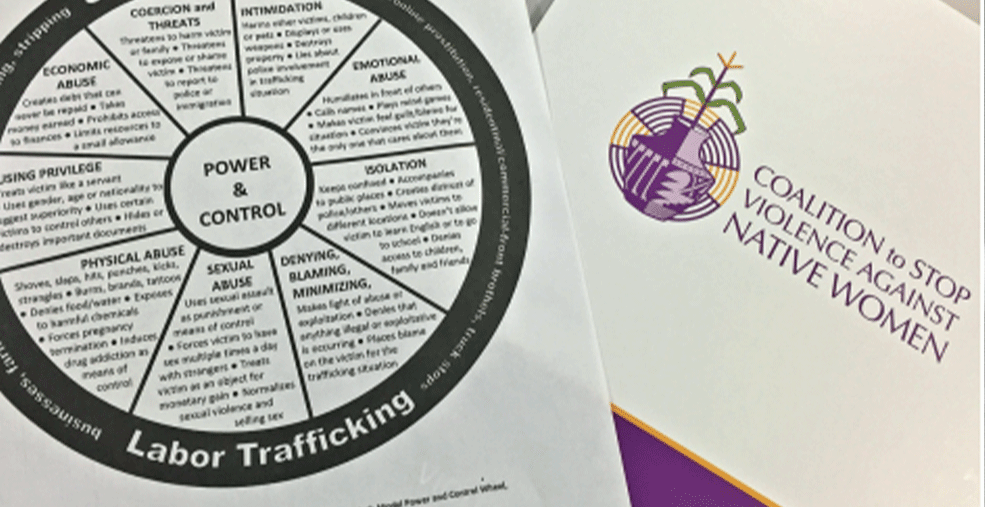
This diagram, which shows the cyclical nature of sex trafficking and how victims have a hard time escaping, is one of many tools available for educational purposes.