
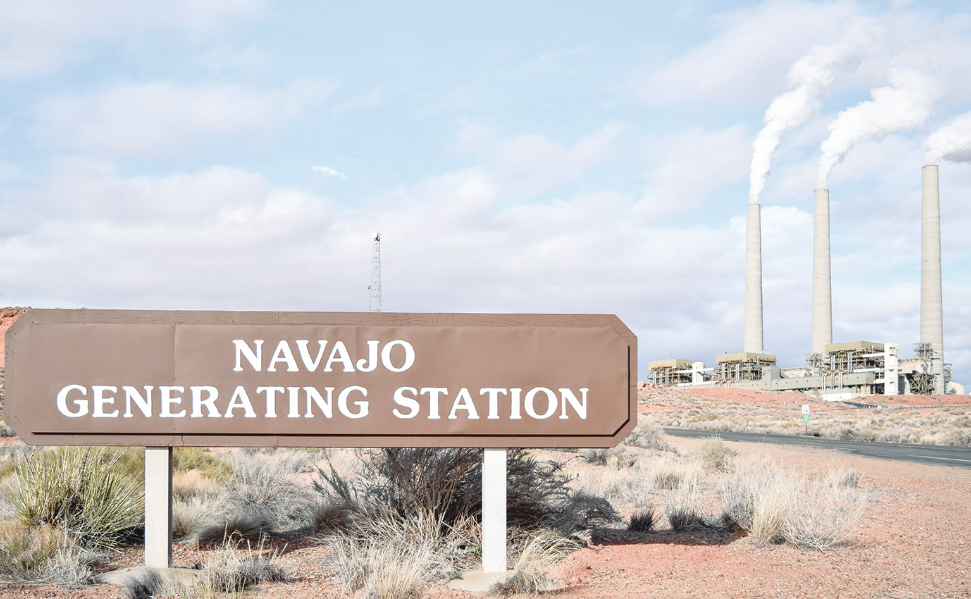
The Department of the Interior met with stakeholders in the Navajo Generating Station last Wednesday to discuss the possible closure of the plant, which together with the Kayenta Coal Mine supplies 1,000 jobs and 80 percent of the Hopi Tribe’s revenue.
BY KRISTA ALLEN
WESTERN AGENCY BUREAU
LECHEE, Ariz. — The Department of the Interior on March 1 met with officials and Navajo Generating Station stakeholders in Washington to discuss the future of the coal-fired power plant.
Citing high electricity costs, the owners of the NGS voted last month to close the power plant here at the end of 2019, although one owner, the Bureau of Reclamation, wants to explore ways to keep the plant open.
However, the plant’s utility owners – Arizona Public Service Co., NV Energy, Salt River Project, and Tucson Electric Power – say that persistently low natural gas prices have rendered the coal-fired facility economically non-viable. Now, the utilities want to close or else cut ties to the power plant.
Last Wednesday’s meeting was the first step into working to identify all stakeholder interests, according to Interior.
“After everybody gave their statements, the discussion settled on what to do,” said Coconino County District 5 Supervisor Lena Fowler, who attended the meeting at Interior headquarters. “The first order is that the Navajo Nation and SRP (the plant operator) have to agree and find a lease extension by July 1.”
Fowler says that means NGS owners would be forced to close the power plant if they do not have a lease extension in place by this summer.
“If the Navajo Nation and SRP do not sign an agreement, they’ll have to start decommissioning in July,” Fowler continued. “They’ll be done by Dec. 22, 2019. If they sign an agreement, they’ll continue operation until 2019. If it stays open beyond that year, the questions are who will be the owners and who will be the operator.”
Acting Deputy Secretary of the Interior James E. Cason said Wednesday’s meeting gave each stakeholder with an interest in the current and future operation of the NGS an opportunity to review the multiple economic realities facing the power plant through 2019.
“And, potentially, beyond,” Cason said. “This economic review is only one piece of the challenges we face. The economies of the Navajo Nation, the Hopi Tribe, and the state of Arizona are clearly tied to the NGS operations.”
Navajo Nation President Russell Begaye said the Nation is working to find a way to keep NGS open until 2030 “o ensure that we have time to responsibly address the economic impact cause by its closure,” Begaye explained. “Closing the NGS in 2019 would have a devastating impact on our Nation by impacting thousands of jobs and dramatically reducing our revenue.”
“We need more time to develop a comprehensive economic plan that allows the Navajo people who work at both the plant and at the Kayenta Mine to continue to live on their homeland and practice their Navajo way of life,” he continued.
Navajo Nation Speaker LoRenzo Bates at the meeting highlighted the economic benefits the power plant provides for the Nation and the entire state of Arizona.
Hopi Chairman Herman G. Honanie said his tribe would lose significant revenue if the power plant closes, resulting in the shutdown of the Kayenta Coal Mine, which would increase the current unemployment rate of around 60 percent.
Hopi Tribe officials indicated that at least 80 percent of the tribe’s general fund budget is derived from royalties from the Kayenta Mine.
Bates also testified about the coal royalty payments the Navajo Nation receives, the scholarship fund, the 1,000 or so jobs the power plant and the mine provide, among others.
Leaders from the Tohono O’odham Nation and the Gila River Indian Community also highlighted the potential impact on their communities, which depend on the Central Arizona Project for water usage. The CAP is powered by NGS.